



This process of theatricalization is not merely a new way to help intangible cultural heritage adapt to modern life; it also opens an effective path for the preservation, transmission, and promotion of ethnic cultural values.
.jpg)
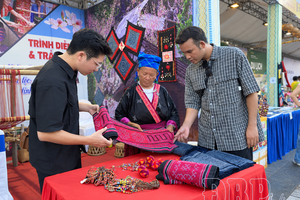
In recent years, visitors to cultural and tourism events in Điện Biên have been consistently captivated by heritage performances rich in identity and infused with the spirit of the Northwestern highlands. Large-scale annual events such as the Ban Flower Festival and the Cherry Blossom Festival, along with ethnic cultural festivals in various communes and wards, have become vibrant spaces for heritage to manifest before the public. Within these activities, the performance of traditional rituals and the recreation of community culture always serve as an indispensable highlight, creating a unique attraction that turns every event into both a festive celebration and an occasion to honor and spread traditional values.
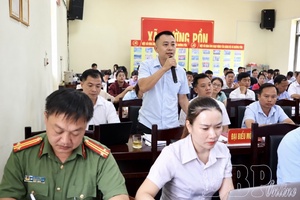
Phạm Thị Ngân, Vice Chairwoman of the Si Pa Phìn commune People’s Committee, notes that her area is home to six ethnic groups, creating a multi-colored cultural tapestry with traditions preserved across generations. These unique rituals are not only protected within community life but are also frequently reconstructed and performed as excerpts in tourism activities and local political events.
.jpg)
Currently, Điện Biên province boasts 24 items inscribed on the National List of Intangible Cultural Heritage, along with two heritage practices recognized by UNESCO: the Then practice of the Thái, Tày, and Nùng people, and the Art of Thái Xòe. These precious assets represent long-standing and distinct traditional cultures that are maintained with enduring vitality. Rituals such as the Then practice of the White Thái, the Rain Prayer of the Khơ Mú, and the Cockscomb Flower Festival of the Cống people are regularly selected for performance. By bringing these specific ethnic traits to the public through authentic visual forms, the province promotes its cultural identity while creating more motivation to pass these traditions down to the younger generation.
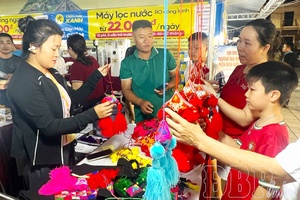
Nguyễn Thị Thu, a visitor from Hanoi, expressed her deep impression of how these traditional rituals are recreated through performances. She noted that these displays are both vivid and attractive, helping tourists gain a deeper understanding of the cultural beauty unique to each ethnic group.
.jpg)
Within the framework of the 2026 Ban Flower Festival, the Thanh Yên commune People’s Committee organized the real-scene show titled “Huyền Tích U Va” (The Legend of U Va). This marks the third year the show has been held, continuing to draw significant attention from locals and travelers alike. The program recreates a legendary space encompassing the customs, labor, and the journey of building and defending the village by the local community.
Quàng Thị Sọn, a resident of U Va village, shared the excitement of seeing her community’s story and culture brought to life on stage with such emotion. Through the program, the image of her hometown is promoted more widely, contributing to the development of community tourism and improving the quality of life for local people.
The theatricalization of heritage in Điện Biên is a delicate blend of traditional soul and modern rhythm. While traditional rituals may originally last for hours with many layers of spiritual ceremony, the stage allows for the most distinctive excerpts to be distilled. Through skillful staging, typical performance elements are highlighted, making them easier for the public to appreciate while still retaining the core spirit of the heritage. This environment becomes even more vivid when sound, lighting, LED technology, and large-scale staging are harmoniously combined with hundreds of local performers to create grand spectacles.
.jpg)
Đào Duy Trình, Head of the Cultural Heritage Management Department (Department of Culture, Sports, and Tourism), emphasized that to elevate these theatrical activities, the department will strengthen the appraisal role of the Arts Council and cultural experts. This ensures that every staged work is creative without fading the original values or the inherent beauty of the heritage. Following the principle of “creativity on the foundation of respect for the original,” the application of modern technology is intended to honor and highlight the depth of the heritage rather than distorting its core meaning.
Furthermore, the department is focused on building a digital data bank for intangible cultural heritage to serve storage, research, and promotion. Parallel to physical preservation, the effective exploitation of digital platforms like TikTok, Facebook, and YouTube to spread heritage will open new ways for traditional culture to reach the public, especially the younger generation, in a natural and engaging manner.
Theatricalizing intangible cultural heritage is a responsible creative journey that opens new doors for preservation. It acts as a bridge between the past and the present, ensuring that heritage is not only kept in community memory or conservation spaces but continues to be nurtured with new vitality, shining brightly in the flow of contemporary culture.
Sầm Phúc
.jpg)
.jpg)
.jpg)
.jpg)
.jpg)
.jpg)
.jpg)
.jpg)
.jpg)
.jpg)
You have 500/500 characters left
Please enter 5 or more characters!!!